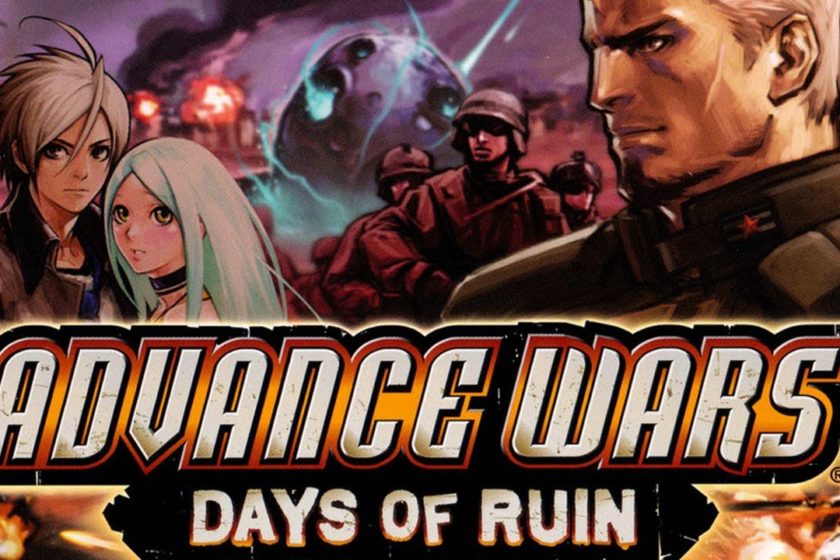
Advance Wars: The Villains of Days of Ruin
Game, Home
The release of an anticipated video game often generates enough celebratory fervour to rival the birth of royalty. Thousands of people queue up at night outside flagship game stores to partake of the fanfare associated with the culmination of a long process of equal parts hard work and hype. But who celebrates the birthday of a video game? Despite its fourth birthday fast approaching, Days of Ruin remains the latest instalment in the Advance Wars series. It’s reaching that remarkable uncensored cusp upon which a child stands armed with the knowledge of how to speak, but bereft of the insight of when to speak. Those kids are exhausting and amazing, and I love them. Is it any wonder then that Days of Ruin happens to be my favourite of the bunch?
I know, I know; reviews are supposed to follow promptly in the wake of a game’s release. Submitting a review over three years in the making isn’t what you consider good journalism. So to soothe our semantic sensibilities, let’s not call it a review. Let’s say “retrospective.” I like that word. Covers up all kinds of nasty little sins, don’t it?
But what I won’t cover is the gameplay, nor the underlying game mechanics, except to say that the decision to nerf Commanding Officers and their powers was a godsend to me. The tactical gameplay and the delicate interaction between military units is strong enough, elegant enough, to withstand the scrutiny of undiluted focus. Without game-changing gimmicks to complicate strategy, the single player gameplay shines. I can’t vouch for the multiplayer side, though. Never tried it.
What I want to deal with is the story. Because for all its clever little gameplay adjustments, the game’s real departure from the series’ ethos rests in the thematic elements of Days of Ruin’s storyline. Where previous installments gave a tongue-in-cheek portrayal of goofy COs fighting cartoon villains armed with colorful paper cutouts, Days of Ruin features a fully formed narrative in a lawless world struggling to recover from the disastrous effects of a meteor shower.
Post-apocalyptic stories tend to deal with themes of freedom and order, survival and sacrifice, and the baseness of human nature laid bare when the rule of law is stripped away. As much as the Mad Max extravaganza of dune buggies, jury-rigged crossbows, and record-breaking explosions appeals to my boyish mouth-agape glee, I also see the concept as dealing with one of the fundamental paradoxes that philosophers like Thomas Hobbes (Leviathan) have long wrestled with: the idea that, for the common man or woman, liberty is a reward for submission. Without the social contract that establishes a central authority–the state–only the dude with the biggest gun (Lord Humungus) is truly free.
Days of Ruin doesn’t turn the Advance Wars series on a pin; in spite of its dark premise, the game remains firmly PG13. But that’s not necessarily a bad thing. The story does an admirable job of introducing believable post-catastrophe conflicts and moral quandaries around food shortages and infectious disease. But this is an adventure and not a thought experiment. The difficult questions are posed, but their heartbreaking answers are never demanded. We are dipped into the vat of despair, left to simmer for a moment and consider these problems, then pulled from the brink by soothing heroics.
Because, yes, Days of Ruin is a story of hate, fear, and opportunism, but its theme is about courage, about the conviction to stand up for your ethics even in the face of push having become the proverbial shove. In this sense it is a bit like a fable, where the moral instruction of self-sacrifice is reinforced by narrative success. No situation is too dire, no threat too overwhelming, to overcome the obelisk-like sturdiness of plain ol’ good-hearted defiance. If your convictions are strong enough, your heroism thorough enough, you will always win. It’s a cursory treatment that sheds all shades of gray from the palette, reducing the story and its characters to big blocks of black and white painted onto a burning wasteland. And we might be cheated of a better story, a more touching story… but at least in black and white, the game is more of a lark.
Days of Ruin lacks pretention. It’s a game of humble charms, but this simple story is studded with a few remarkable gems. Because there’s little depth to the heroes, it’s no wonder my favorite characters are the villains. Some of these lawless strongmen make amazing antagonists.
Waylon is a callous cutthroat who sells his services to whoever is top dog. He cares nothing for others, not even his own men, and occupies himself only with finding the simplest path to a life of personal luxury. A perfect model of the villain-by-neglect, Waylon lacks empathy and scorns mercy and sacrifice. He ignores the suffering pleas of others even when his own actions bring them misery, but can work up an intense hate for those who inconvenience him.
Admiral Greyfield is a megalomaniac sociopath who enjoyed a meteoric rise to power in the wake of the meteor shower. As the highest ranking officer to survive the catastrophe, Greyfield was suddenly propelled into command from a desk job he’d landed after a checkered career of military incompetence and incapable leadership. He formed the New Rubinelle Army to restore law and order, but his spiteful and vindictive nature made him easy prey for darker forces, and led him to pursue pre-disaster conflicts with manic zeal. A coward at heart, Greyfield bullied enemies and allies alike with the threat of death sentences and ruled his army with a despot’s iron fist, seeking to become King Greyfield of the new world. He executed civilians and prisoners of war, sabotaged his own allies to avoid being upstaged, and even sacrificed thousands of his own troops to weapons of mass destruction to sate his own rage.
Then there’s the Mayor. He wasn’t even given a name, but so memorable is his part in the story that he takes the prize as my favorite character. The Mayor is the elected leader of a group of townspeople who’ve survived the catastrophe. Crafty, selfish, and self-righteous, the Mayor imposes on Brenner’s Wolves (the good guys) to save him and his people, time and again, from the predations of raiders, food shortages, and natural hazards, yet refuses to honor the promises he’s made to take in other refugees. He begs and pleads for help, then indignantly accuses his saviors of bullying the unarmed townspeople into submission. He is the ultimate hypocrite and the epitome of the frightening process of backwards rationalization that makes villains out of victims. And this is why the Mayor’s so scary–more scary than any despot or bloodthirsty thug flagging for attention by toting his rifles and tanks. The Mayor is so mundane, so credible, an inconspicuous puzzle piece in society whose rotten foundation isn’t seen until the puzzle unravels with his corruption. And these people exist all around us in our own lives, like sleeper agents just waiting for the law to break down, taking pot shots at others where cracks appear in society. And making villains out of their victims.
What really gets me is how effective the villains are. It’s unbelievable how such humble resources pack a wallopin’ of a punch like that. It’s like watching MacGyver throw together a flamethrower out of chewing gum and paper clips. Using characterization-by-sledge-hammer, these cardboard cutouts are rough-hewn, not chiseled, and still the actions of these archetypes is enough to make my blood rise like nothing else. These narrative building blocks–hypocrisy, lack of gratitude, and twisted logic–work on such a fundamental level that by comparison, games like Final Fantasy XIII and Metal Gear Solid 4 that take such pains with epic stories, cinematic dialogue, and elaborate characterization just fall flat, feeling limp-wristed and awkward. Days of Ruin’s light-hearted fable touched me–pissed me off–where games that tried to touch me passed unfelt and unnoticed even after a barrage of dazzling CG effects.

![]()
Once these villains are toppled, the game flags. Without the motivation of wreaking vengeance on the craven thugs who’ve wronged you, the story lacks an engine. Dr. Caulder works great as the mysterious shadow, operating behind the scenes to supply both sides of the conflict with experimental weapons of mass destruction. But once the shadow is pulled from behind the curtain and into the light for all to see, this psychopathic monster proves too weak a villain to drive the story. Dr. Caulder opposes the heroes without passion or concern. He shows no anger, and makes no excuses for his evil ways. Like a robot, he is emotionless, and exists simply as an obstacle, a force of nature. But a force of nature lacks an ethos, and as a villain, Dr. Caulder has no more narrative value than a brick wall. And somewhere around here, after Will comes to terms with his leadership and Admiral Greyfield sinks to his watery grave, the story ends. We are left with an empty third act, an epilogue filled with war games bereft of meaning. The story doesn’t realize it’s over. It has survived itself. And as I stare at the brick wall before me, I realize I’m done.